Licensed 280E/471(c) representation you plug into your practice.
You can sign it and you can defend it. The question is whether you want to carry a §280E exam through IDRs, record reconstruction, and Appeals on top of a filing season. I am the Enrolled Agent who takes that piece, so the position is documented and the client stays yours.
Positions you’d rather not sign
Aggressive 280E/471(c) work needs a licensed EA or CPA to sign and represent. Without one, the return sits exposed.
A credential on the POA
An Enrolled Agent, admitted to practice before the IRS, signs the return and stands in front of the IRS when a notice lands.
The work, not a promise
Every engagement produces a defined, signed deliverable, disclosed and defensible. Client identities stay out of everything, including anything written about the work.
One licensed engagement.
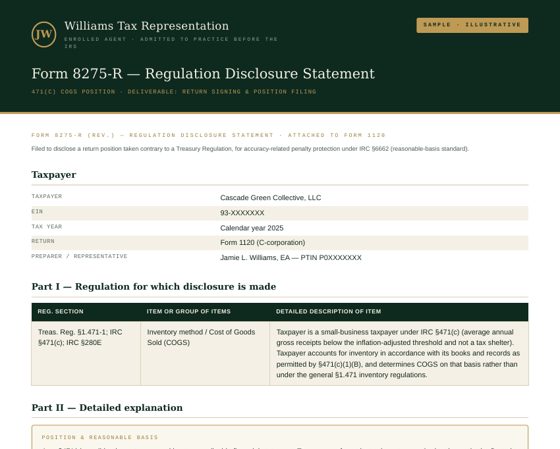
Start with a single client: sign and file one 471(c)-disclosed return, or take one exam or collections case, delivered end to end and tracked in your portal.
One consult, one engagement, one proof point. Scale to your whole cannabis book once it works.
Give your cannabis book a name on the Power of Attorney.
A 30-minute partnership consult: which of your clients carry exposure, and where a licensed representative earns its keep.
Enrolled Agent admitted to practice before the IRS. General information, not legal or tax advice. Representation begins only under a signed engagement.